
4 Herbs That Can Help Your Dog
Slippery elm, chamomile, turmeric and parsley are four simple herbs that dog owners have used for years, and you can buy all of them here in Australia.
James here, founder of Pet Snacks. I was going through some of our old archives recently and found my notes on them. You might already have one or two in your kitchen.
For each one, this guide covers what it is, how owners usually give it, roughly how much, where to buy it, and when to leave it alone. None of them replaces your vet. They can be a gentle, practical help for everyday niggles.
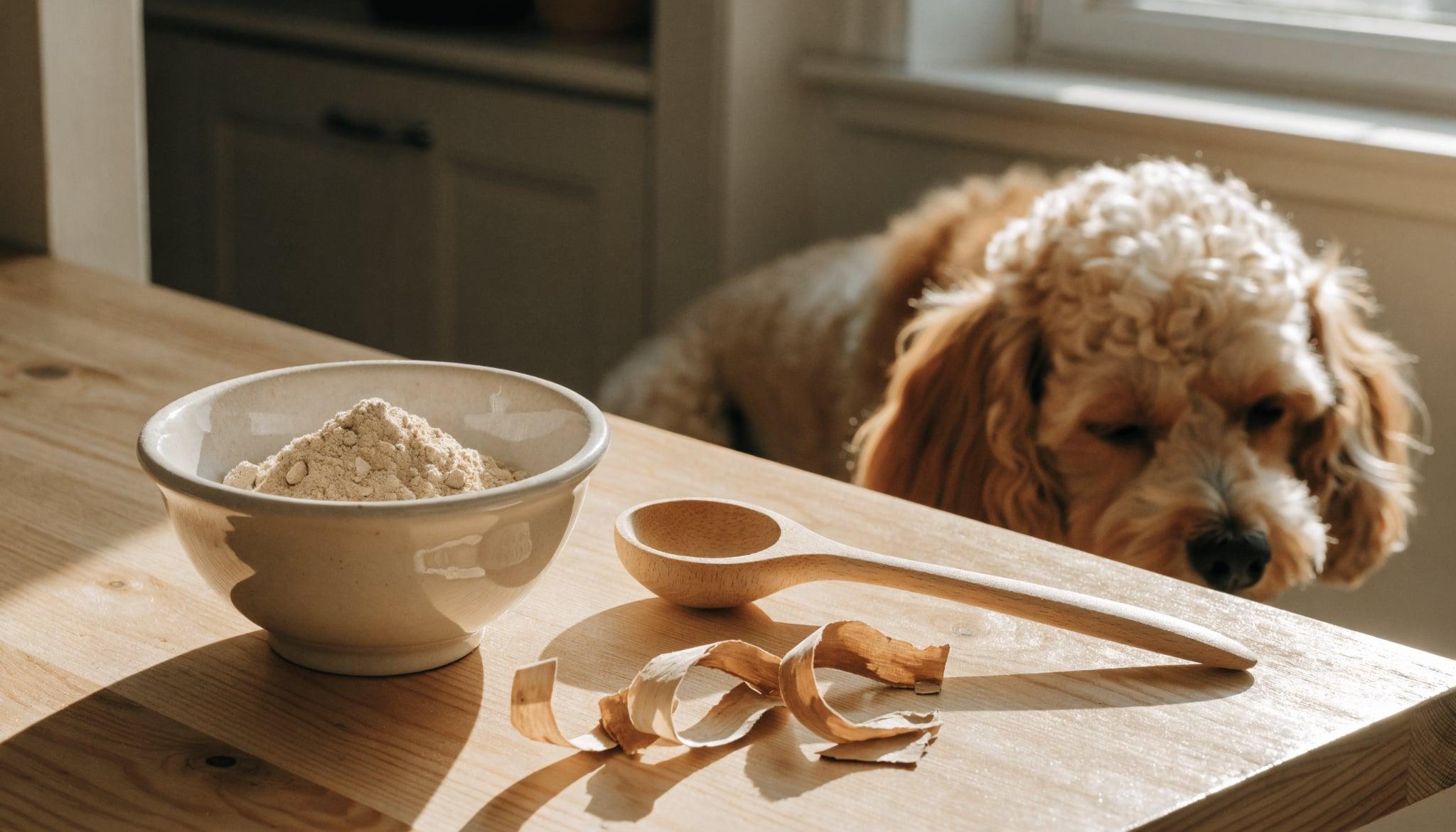
1. Slippery elm, for upset tummies
Slippery elm is the dried inner bark of an elm tree, ground into a fine powder. When it's mixed with water it turns into a soft, slippery gel. That gel is traditionally used to coat and soothe the gut.
Owners usually reach for it when their dog has loose stools, has eaten something they shouldn't have, or has a mild tummy upset after a food change.
How to give it
Mix the powder with cold water into a runny porridge. Stir it through your dog's food, or give it just before a meal. It soaks up a lot of water, so add more if it gets too thick.
How much
The Whole Dog Journal suggests about ¼ teaspoon of powder for every 4.5 kg (10 lb) of body weight, given with meals until things settle. Pack the powder down when you measure, because it's very light and fluffy.
Where to buy it in Australia
Look for plain slippery elm bark powder at health food stores, chemists like Chemist Warehouse and Priceline, or Amazon AU. Capsules work too: open them and mix the contents with water.
When to skip it
-
Your dog is on medication. Slippery elm can slow how well other medicines are absorbed. Check with your vet, and give it a few hours apart from any medication.
-
Your dog has a urinary tract issue. It's fairly high in magnesium, which may not suit dogs prone to struvite crystals.
-
The product has added ingredients. Avoid lozenges and flavoured blends made for people. Some contain sweeteners, and xylitol is toxic to dogs.
-
The upset is more than mild. If diarrhoea lasts more than a day or two, or comes with vomiting, blood or lethargy, see your vet.
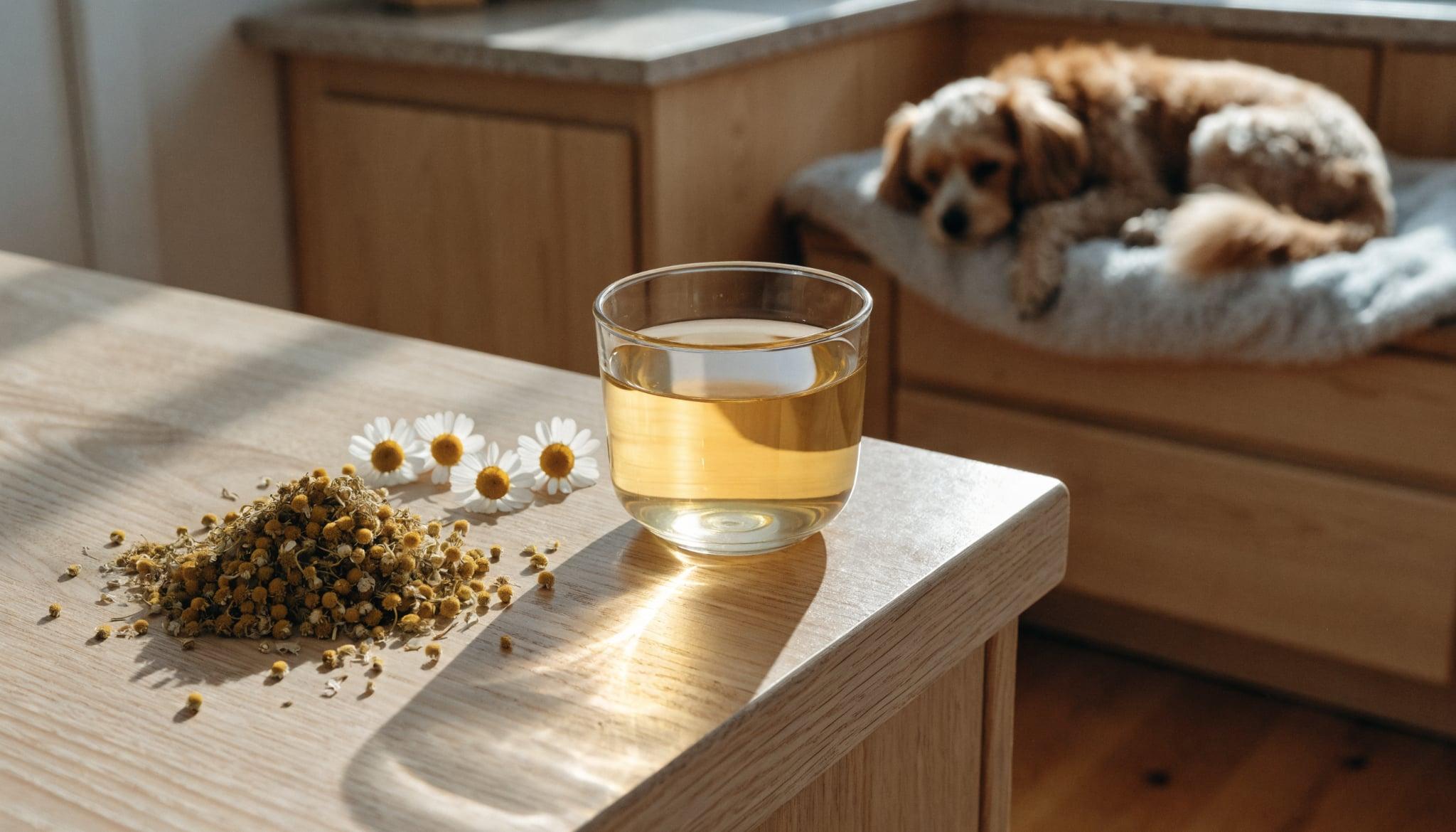
2. Chamomile, for nerves and digestion
Chamomile is a small daisy-like flower, the same one in the tea many of us drink before bed. It's known for a gentle calming effect, and it's also used to help settle the stomach.
With storm season and New Year's fireworks coming, this is the one many owners like to have on hand.
How to give it
There are two common ways:
-
A calming product made for dogs. These come as chews, powders or liquids, often blended with other calming herbs. It's the simplest option because the dose is already worked out for your dog's size.
-
Plain chamomile tea. Some owners brew a weak cup, let it cool completely and pour a little over food. If you do this, use 100% chamomile only. Many "sleepy" teas mix in other herbs that aren't suitable for dogs.
How much
There's no standard dose for dogs. For a dog-formulated product, follow the label for your dog's weight. For tea, start with a small splash and ask your vet what suits your dog. More isn't better here, and high amounts can upset the stomach.
Where to buy it in Australia
Pure chamomile tea is sold at Coles, Woolworths and most health food stores. Calming chews and powders made for dogs are sold at pet stores, vet clinics and on Amazon AU.
When to skip it
-
Your dog has plant allergies. Chamomile is in the same family as ragweed and daisies, so dogs with those allergies may react to it.
-
Your dog is pregnant or on medication. This is especially true of blood thinners or sedatives. Check with your vet first.
-
The anxiety is severe. Chamomile is for mild nerves. A dog that panics, hurts itself or can't settle needs a proper plan from your vet.
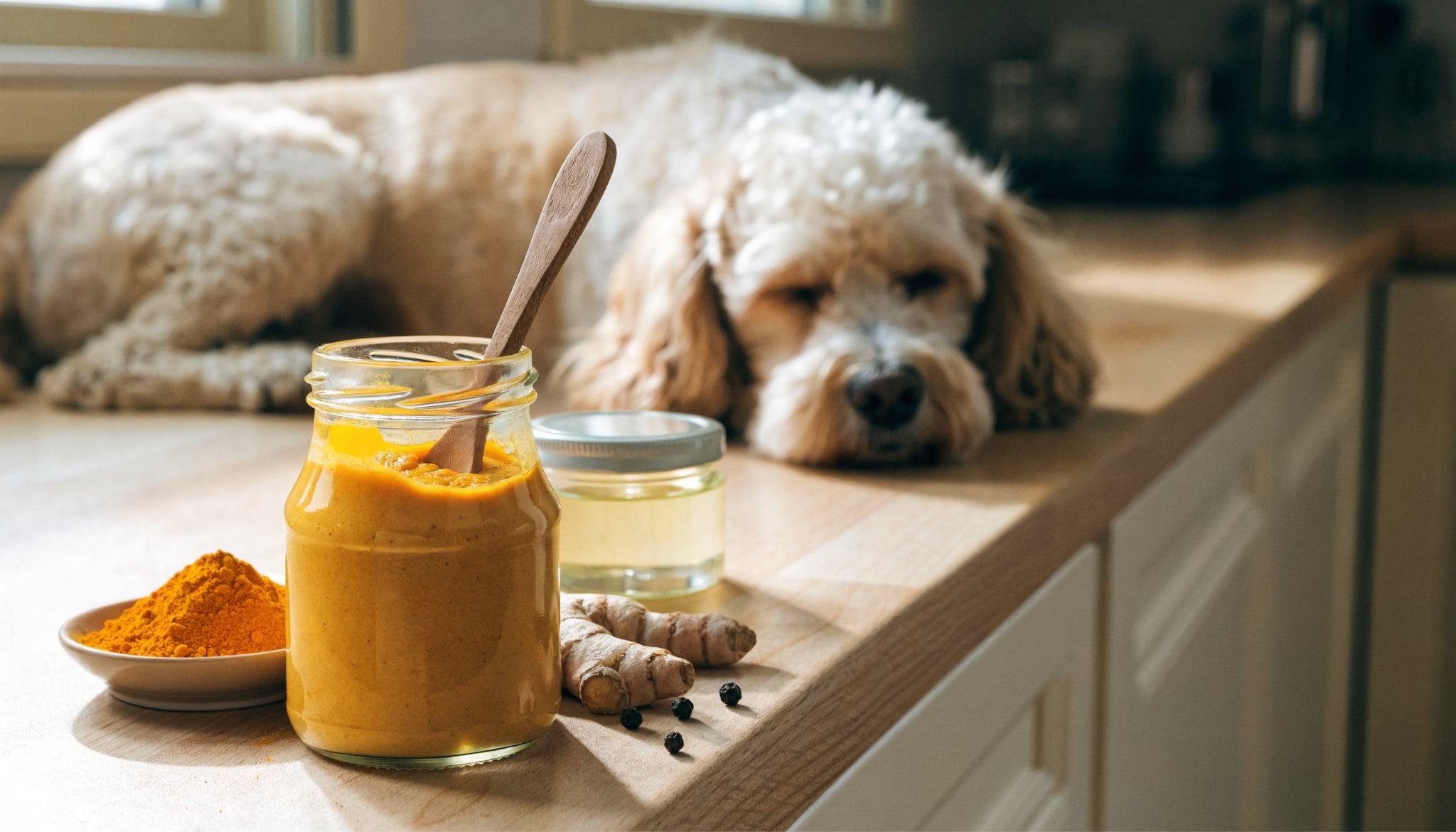
3. Turmeric, for stiff joints
Turmeric is the bright yellow spice that's probably in your pantry already. Its active compound, curcumin, is widely used to support joint comfort, which is why so many owners of older or stiffer dogs are interested in it.
There's one catch: dogs don't absorb turmeric well on its own. That's why most owners give it as "golden paste", which mixes it with black pepper and a healthy fat to help the body take it up.
How to make golden paste
This is the most widely shared version:
-
Simmer ½ cup of turmeric powder with 1 cup of water on low heat for about 7 to 10 minutes, stirring, until it forms a thick paste. Add a little more water if it gets too dry.
-
Take it off the heat and let it cool slightly.
-
Stir in ⅓ cup of coconut oil and 2 to 3 teaspoons of freshly ground black pepper.
-
Store it in a glass jar in the fridge for up to 2 weeks.
Turmeric stains everything, so use an old spoon and a bowl you don't mind turning yellow.
How much
Start small and build up over a couple of weeks. As a rough guide, Ollie suggests these daily amounts of golden paste, mixed into food:
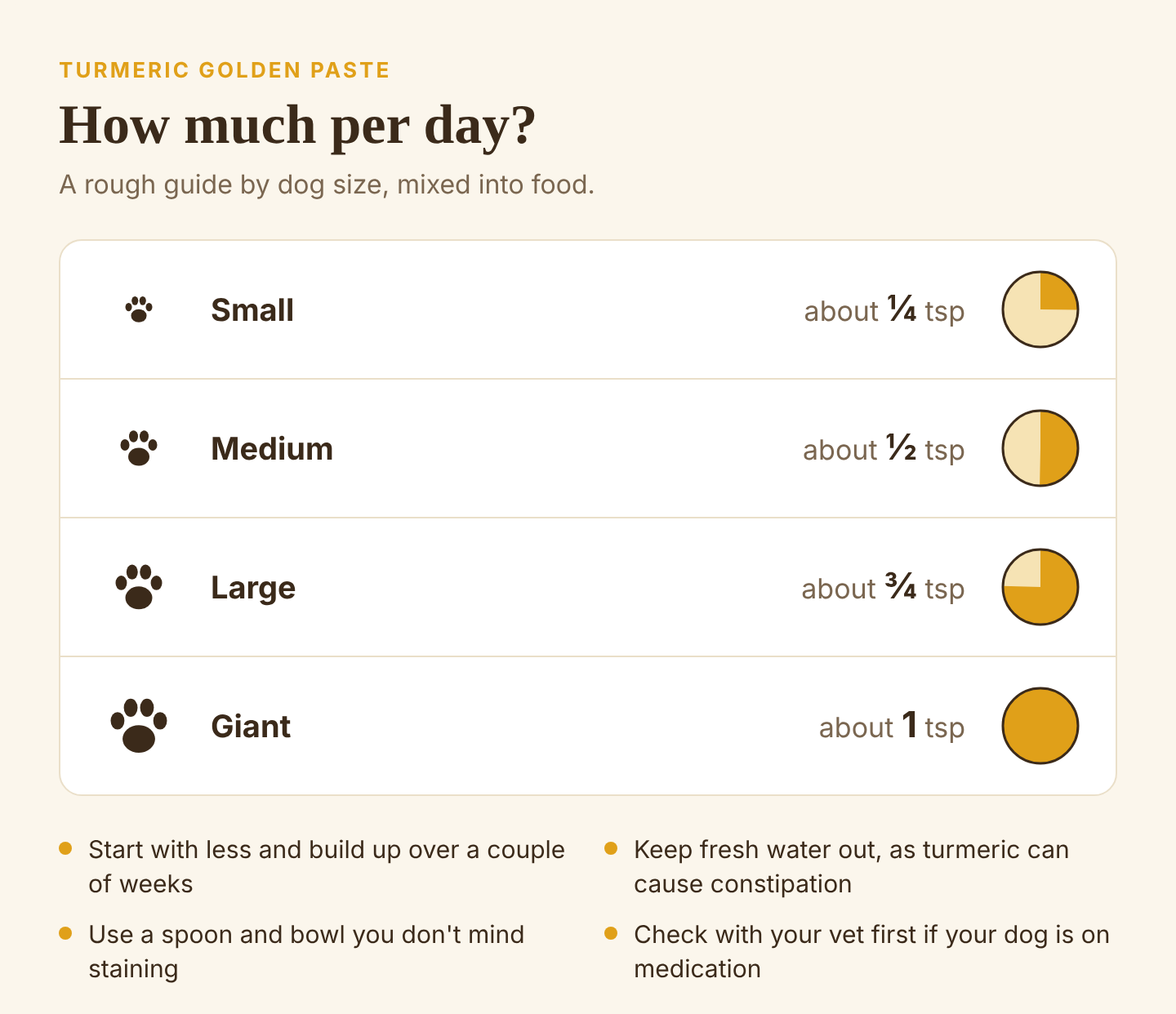
Make sure fresh water is always available, because turmeric can cause constipation in some dogs.
Where to buy it in Australia
Turmeric powder, black pepper and coconut oil are all sold at Coles, Woolworths and Aldi. If you'd rather not make paste, turmeric chews and powders made for dogs are sold at pet stores and on Amazon AU.
When to skip it
-
Your dog is on blood thinners or diabetes medication, or has surgery coming up. Turmeric can affect clotting and blood sugar, so speak to your vet first.
-
Your dog has gallbladder problems or a history of kidney or bladder stones. Check with your vet before starting.
-
Your dog's stomach doesn't agree with it. If you see vomiting, diarrhoea or constipation, stop and let your vet know.
-
You're using it for pain your vet hasn't looked at. Stiffness and limping can have many causes, and some need proper treatment. Never give human pain relief such as ibuprofen to a dog, because it's dangerous for them.
4. Parsley, for fresher breath
Parsley is the leafy green herb in every supermarket. It's been used for a long time as a natural breath freshener, and a little sprinkled over dinner is an easy thing to try.
One honest note: parsley freshens breath, but it doesn't fix the cause. Ongoing bad breath usually comes from plaque and tartar on the teeth. So think of parsley as a nice extra, not a substitute for looking after your dog's teeth.
How to give it
Wash a few sprigs of fresh curly parsley, chop them finely and sprinkle them over your dog's food. Chopping helps it mix in so it doesn't get picked out.
How much
Keep it small. A pinch of chopped parsley suits a small dog, and up to about a teaspoon suits a large dog, a few times a week. This is a garnish, not a meal.
Where to buy it in Australia
Fresh curly parsley is in the fruit and veg section at Coles, Woolworths, Aldi and your local grocer. It's also one of the easiest herbs to grow in a pot at home.
When to skip it
-
Your dog is pregnant or has kidney problems. Leave parsley out unless your vet says otherwise.
-
You've got the wrong plant. Use curly parsley from the shop. Don't use "spring parsley" or anything picked wild, and don't use concentrated parsley oils or supplements.
-
The breath is really bad, or has changed suddenly. Very strong or unusual breath, sweet- or ammonia-smelling breath, red gums or a dog that won't chew properly all need a vet check.
Before you start
A few simple rules make any of these safer to try.
-
Talk to your vet first if your dog is on medication, pregnant, very young or very old, or has an ongoing health condition.
-
Try one at a time. If something doesn't agree with your dog, you'll know which one it was.
-
Start small. Begin with less than the guide amount and build up over a week or two.
-
Buy plain. Pick plain powders and teas with nothing added, or products made for dogs.
-
Know when it's a vet job. Ongoing diarrhoea, vomiting, blood, limping, or a dog that's flat or off their food all need a vet, not the pantry.
A final word
I shared these because simple, honest help is what Pet Snacks has always been about. You should always know exactly what you're giving your dog and why. If you try any of them, I'd love to hear how your dog went.
James Founder, Pet Snacks
This guide is general information only and isn't veterinary advice. Every dog is different, so please check with your vet before adding anything new to your dog's routine.
Sources
-
Slippery elm for dogs, Whole Dog Journal
-
Chamomile for dogs, Great Pet Care
-
Turmeric for dogs, Ollie
