
Why We Dry Two Treats Two Different Ways
Someone asked us recently: "If natural is natural, why don't all your treats go through the same process?"
Because "natural" describes what goes into a treat. It says nothing about what the treat is meant to do. That comes down to how it's made.
We start with the job, then choose the method. Two of our best sellers show why.
Soft vs. firm: two treats, two jobs
-
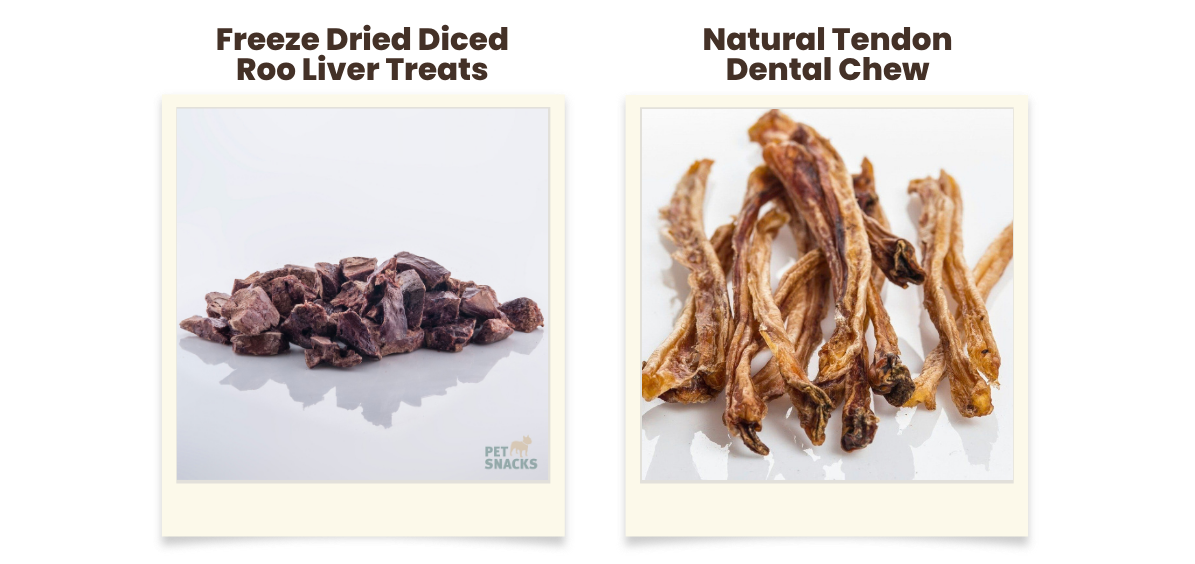
Diced Roo Liver is built to be soft. It snaps into small pieces for training and crumbles over a meal.
-
Kangaroo Tendon is built to be firm. A dog works at it slowly, and it lasts.
Dry them the same way, and one of them fails.
How each method works
-
Our Roo Liver is freeze-dried. Moisture is drawn out under vacuum at low temperature, so the meat is never cooked. It stays light and crumbly, close to the texture of the fresh liver it started as.
-
Our Tendon is air-dried. Warm air moves across it slowly over a long stretch, drawing moisture out gradually. That slow process builds the dense, chewy structure that makes it a proper long-lasting chew.
What happens when you get it wrong
-
A freeze-dried tendon loses the resistance that makes it worth chewing.
-
An air-dried liver turns toward jerky: too hard to break up and too tough for a training treat.
Neither method is better. Each one suits a different job.
The method is part of the product
Drying isn't a production detail. It sets the texture, and the texture decides what a treat is good for. That's how we approach every product: define what the treat needs to do, then choose the process that delivers it.
Which one is right for your dog?
-
Roo Liver: soft and easy to break. Best for training and topping meals.
-
Tendon: firm and long-lasting. Best for a slow, satisfying chew.
